









How It Works: The Science Behind Visual Stress
Color My Vision is a small, independent company. As a nurse, I believe in stepping back and taking care of the whole person. Visual stress is a piece of the puzzle.
Visual Stress, sometimes referred to in the literature as Scotopic Sensitivity Syndrome, or light sensitivity, regardless of what it is called, is a problem with the brain, not the eye. It is a perceptual processing disorder, not a structural issue, a finding that the most current brain imaging research supports. In simplistic terms, when an individual suffers from visual stress, their brain has difficulty or an inability to process certain wavelengths of light. In this way, light (especially bright and fluorescent lighting) becomes a stressor on the brain. This stress causes certain parts of the brain (e.g., the visual cortex) to become overactive. It is this overactivity and inability to effectively process visual stimuli that creates a variety of visual, physical, cognitive, emotional, and neurological symptoms.
What is Light Sensitivity?
To understand this, we need to understand how light effects the brain. The study of colorimetry can become complex very quickly. It is for this reason I will attempt to give just a basic overview.
A very important piece when assessing for light sensitivity is the eye exam. This will find anything structural that needs correcting. The structural piece I like to think of as the foundation. When this foundation is laid a tint eval yields best practice results
To understand colorimetry, you first need a very basic explanation of the structure of the eye. Light comes into the eye and is first processed in the retina. Multiple signals are produced as it passes through the visual cortex. Those signals are further processed and transmitted down pathways to your brain. Current theory believes that visual stress happens if the timing of these signals isn’t processed correctly. The hypothesis is that if you can treat the timing issue, then the brain doesn’t work as hard processing the visual stimulus, and visual stress will decrease. The study of colorimetry is thought to work because white light encompasses all the wavelengths in the entire visual spectrum. If you are able to find the problem wavelength and can filter it, then visual stress decreases and the client is more comfortable. This leads to the thought that the more custom to the client’s needs, the higher chance of decreasing visual stress and all of its conditions. The research is still in its infancy. If you look, you find both sides of the argument. My personal belief is that if it helps, the science will follow.
I hear parents and adults come to me having been told:
- You have a vision problem and need glasses. This is the exact reason for seeing your eye health professional and why it is extremely important they are part of your visual stress care team.
- You’re simply having difficulty with basic reading skills and just need to practice more.
Some clients tell me, “I wear sunglasses all the time because no matter where I am, the space is always to bright.”
They come to me having been told they have 20/20 vision, reading practice doesn’t help, and find the environment is still too bright sometimes even if they are wearing sunglasses.
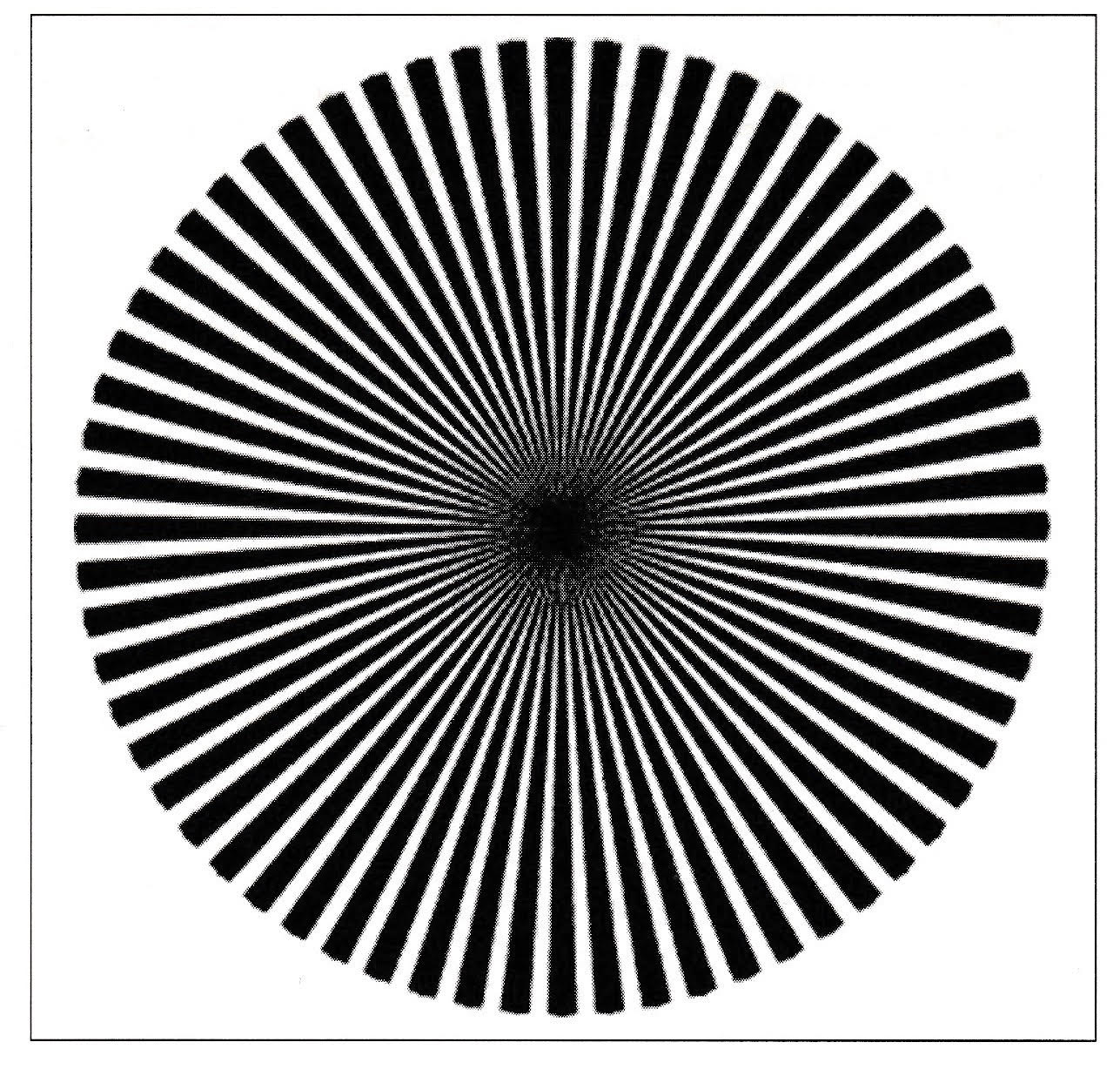 Some people with visual stress (some clients have called it visual dyslexia, scotopic syndrome, light sensitivity.), experience text similarly to the way you experience optical illusions like the one on the left. For those people, the text can be moving, blurry, distorted, etc., and some even see colors on a white page.
Research shows that not everyone sees letters and words the same way, with the same spacing, or even recognizes them as letters.
Light Sensitivity also can affect people in ways other than text distortions. Possible physical symptoms include headaches, eye strain, fatigue, anxiety, difficulty staying focused, restlessness, mood changes, nausea, and dizziness even in the absence of visual distortions.
Eye Health Professionals-
Visual stress and prescription errors.
The lab that places the tint on Color My Vision lenses can be considered therapeutic only when evaluated by a licensed professional that can diagnose or treat. Color My Vision makes assessments only and depends on licensed professionals to deicide if this should be part of the client’s care plan. Only after the licensed professional has evaluated the benefit, are the lenses determined to be therapeutic rather than a life style choice. Color My Vision will not place any tint on a frame and give to the client for this reason. The client will either be given uncut lenses or the lenses will be sent to the eye professional of the client’s choice, the eye professional will be given recommendations for further evaluation. It is the sole decision of the eye professional to decide if the tint will be considered a life style choice or therapeutic, and if the lenses should be placed on a frame. Until then, the tinted lenses should be considered either a life style choice or a custom tinted optic lens.
Visual stress and prescription errors
For more information on visual stress and how it can effect prescription errors I would refer to the book by Mark Addison, ”A guide to prescribing and dispensing Tints and Filters.” Published in 2018. I highly recommend this book for any professional who is wanting to add colorimetry to their practice.
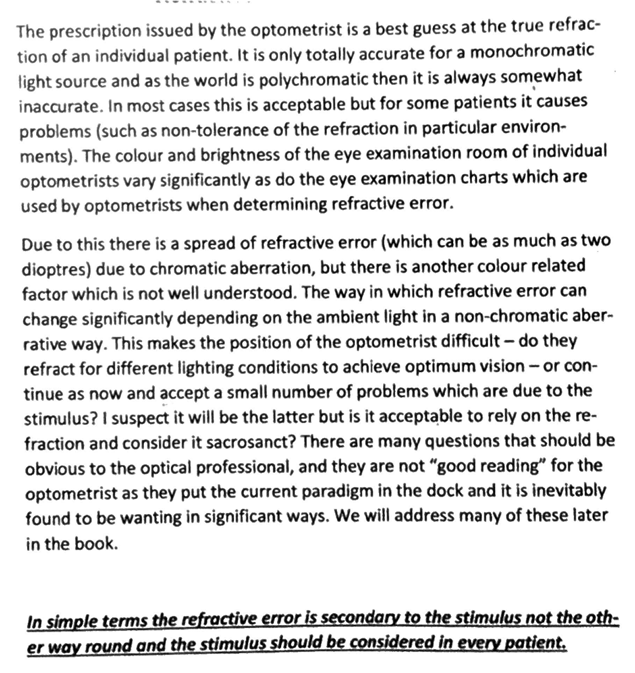
Addison,M. (2018). A Professionals Guide To Prescribing and Dispensing Tints and Filters (1st ed., pp. 6). DP Publications.
Tinted lenses and potential issues.
As a nurse I truly believe there is no such thing as a free med or treatment. With everything there can be potential issues. Mark points out some potential problems when prescribing tints for clients.
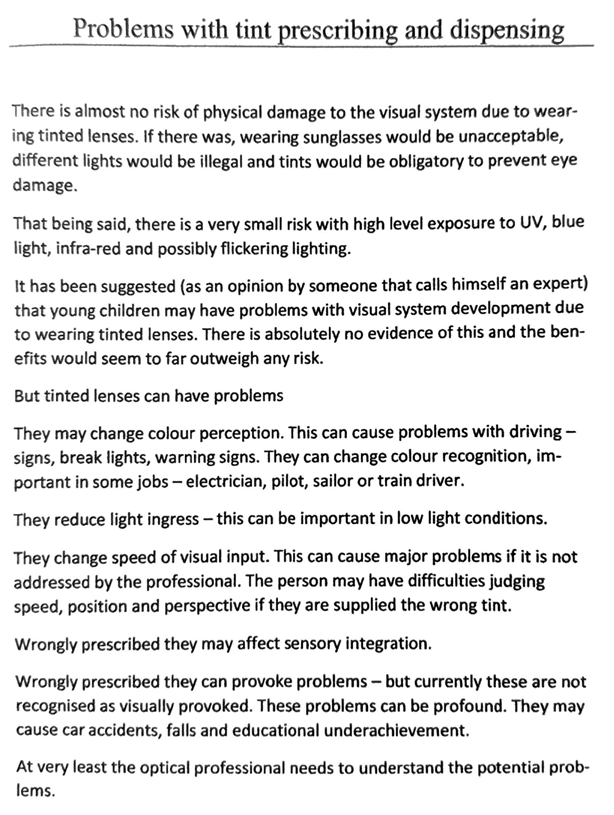
Addison,M. (2018). A Professionals Guide To Prescribing and Dispensing Tints and Filters (1st ed., pp. 239). DP Publications.
Comparing other tint assessment methods
There are many different methods to assess tints. The comparisons should be considered a starting point to further your own knowledge and not a comprehensive understanding of each method.
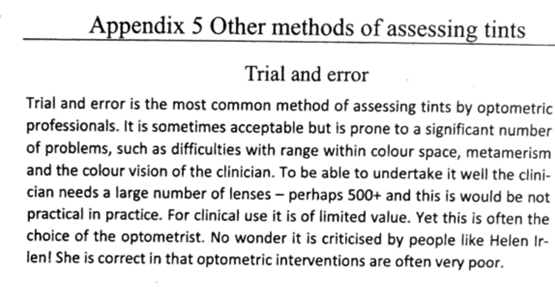

Addison,M. (2018). A Professionals Guide To Prescribing and Dispensing Tints and Filters (1st ed., pp. 253). DP Publications.
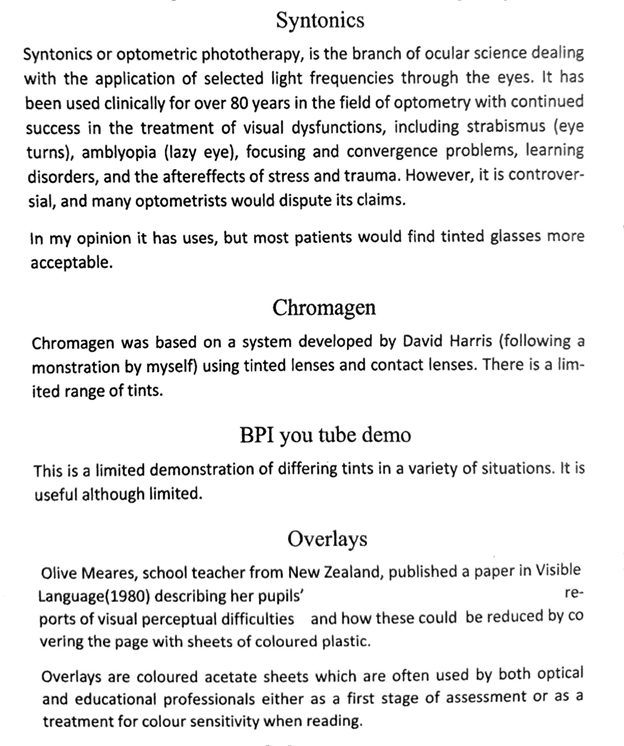
Addison,M. (2018). A Professionals Guide To Prescribing and Dispensing Tints and Filters (1st ed., pp. 254). DP Publications
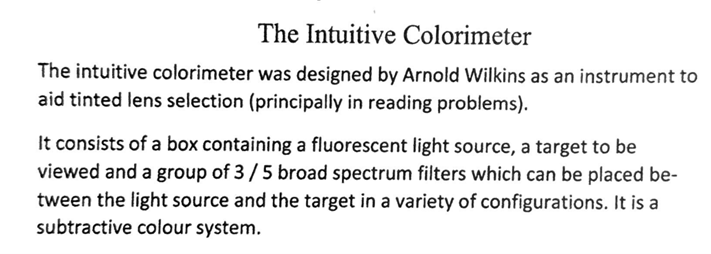
Addison,M. (2018). A Professionals Guide To Prescribing and Dispensing Tints and Filters (1st ed., pp. 256). DP Publications.
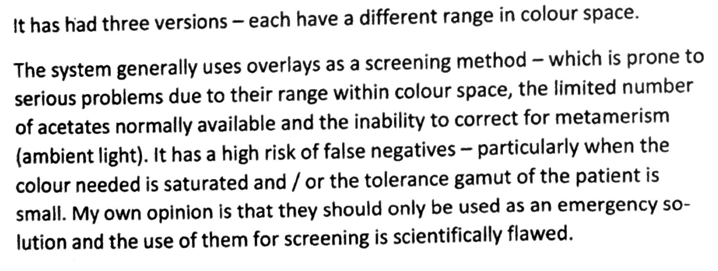
Addison,M. (2018). A Professionals Guide To Prescribing and Dispensing Tints and Filters (1st ed., pp. 257). DP Publications.